
Blog
Insight and analysis on Australia’s workforce, recruitment trends, and the forces shaping how we work. Expert perspectives and practical takeaways for job seekers and clients.
Andy Mansoori • September 22, 2025
Australia’s Railway 5G Transition: FRMCS Technology and Transformation Projects
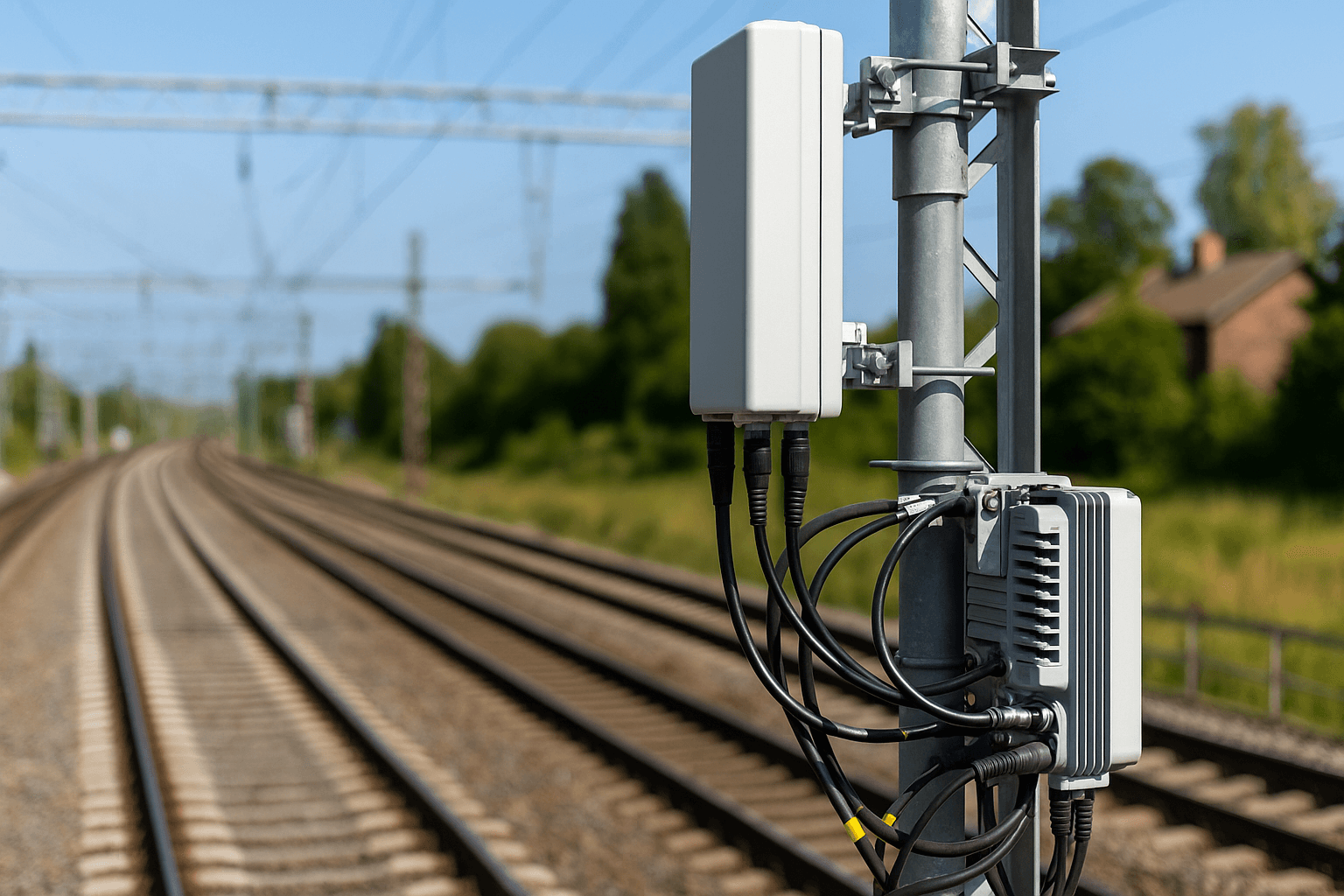
Australia’s railway industry is undergoing a significant technological upgrade as operators transition from 2G communication systems to 5G-based technology, paving the way for Future Railway Mobile Communication System (FRMCS) technology. Over the next two years, this infrastructure modernisation is going to create many new career opportunities for telecommunications professionals with mobile network experience.
Key Points
- Australia’s rail networks are shifting from 2G to 5G systems, creating the foundation for future FRMCS migration. Major projects like Perth’s METRONET and Melbourne’s Metro Tunnel are already underway, with industry and government planning for broader rollout.
- FRMCS, built on 5G standards but radio-agnostic, will enable capabilities such as driverless train operations, real-time monitoring, stronger connectivity, and improved passenger experience.
- These upgrades are large-scale, multi-year infrastructure programs requiring teams of RF engineers, systems designers, project managers, safety specialists, and technicians.
- Telecommunications professionals with 3G, 4G or 5G expertise are well positioned to transfer into rail, provided they can adapt their skills to industry frameworks and safety standards.
Australia’s Current Railway Communication Systems
For more than two decades, Australia’s railways have relied on GSM-R, a 2G-based communication standard developed specifically for train operations. Introduced globally in the 1990s as part of the European Train Control System, GSM-R offered what rail needed most at the time: safe, reliable voice communications, group calling for drivers and controllers, and guaranteed spectrum reserved for rail.
Unlike mobile carriers, which quickly advanced through 3G and 4G, railway networks stayed on 2G. GSM-R was safety-critical and interoperable. Once embedded into signalling systems, it was costly and risky to replace.
“GSM-R lasted because it was purpose-built for rail,” explains Andy Mansoori, Telco Portfolio Account Director – National at Launch Group. “It gave operators dependable voice and signalling. But today, rail needs far greater bandwidth and flexibility than GSM-R can provide.”
Modern networks must support real-time CCTV, predictive maintenance, and the connectivity required for driverless train operations, all of which exceed GSM-R’s capabilities. As a result, the sector is preparing to leapfrog directly from 2G to FRMCS, the 5G-based system designed to meet the data demands of contemporary railway operations.
This transition is already in motion in Australia, with upgrades underway in Perth and Melbourne. Both METRONET in Western Australia and the Metro Tunnel in Victoria are deploying new 5G communications infrastructure to prepare their networks for future FRMCS migration.
As part of Perth’s program, the Public Transport Authority has contracted Nokia to deliver a new digital radio system capable of supporting FRMCS. Momentum is building elsewhere across the nation as well. In July 2025, the Australasian Railway Association (ARA) convened a workshop with operators, government agencies, and suppliers to coordinate plans for both ETCS and FRMCS, signalling a more unified approach.
Understanding FRMCS Technology
The Future Railway Mobile Communication System (FRMCS) is the designated successor to GSM-R. Built on 5G standards, FRMCS is designed from the ground up to handle both the safety-critical needs of rail and the bandwidth demands of today’s digital operations.
“FRMCS is still in its early stages, but it’s the first communication system designed with today’s data-driven railway in mind,” notes Andy. “It advances us past GSM’s voice-only networks to support everything from real-time monitoring to automated operations.”
FRMCS is being developed under the leadership of the International Union of Railways (UIC). Unlike GSM-R, which is tied to 2G, FRMCS is radio-agnostic; it can operate on 5G New Radio, LTE, or future evolutions, giving it a far longer lifecycle.
In August 2025, Nokia unveiled the first commercial 5G solution for the FRMCS band (1900 MHz), pairing a rail-optimised 5G standalone core with purpose-built radios.
The benefits of this will be significant:
- Driverless train capability: supporting automatic train operations and real-time control.
- Stronger connectivity: eliminating blackspots that currently interrupt mobile and signalling systems.
- Mission-critical services: supporting voice, data, and video through features like MCX (Mission-Critical Push-to-Talk, Data, and Video).
- Efficiency and safety: enabling predictive maintenance, live CCTV feeds, and improved passenger communications.
- Passenger experience: providing seamless connectivity onboard, making journeys more productive and enjoyable, helping rail compete with road travel.
- Environmental impact: delivering more efficient, automated operations that encourage public transport uptake, reduce carbon emissions, and ease urban congestion.
Career Opportunities for Telecommunications Professionals
Over the next two years, Andy expects a significant uptick in the number of roles this transition will require. “These projects will need people in every discipline. From RF engineers and systems designers through to project managers, health and safety specialists, and field technicians.”
That breadth of demand shows how significant the shift to FRMCS will be. Australia’s railway upgrades are large-scale infrastructure projects that require full project teams, comprising engineers, supervisors, managers, and technical specialists, working together over many years. While projects like Perth’s METRONET and Melbourne’s Metro Tunnel are already underway,
similar programs are coming
as other networks begin preparing for FRMCS. as other networks begin preparing for FRMCS.
This level of demand opens the door for professionals outside the rail sector. Mobile and wireless engineers, network designers, and telecommunications specialists already hold the technical foundations rail operators are seeking. “If you’ve worked on 3G, 4G, or 5G networks,” says Andy, “that knowledge transfers directly into the communications upgrades rail projects are beginning to roll out.”
5G Project Roles in Demand
Andy highlights that demand will span across:
- Radio frequency (RF) engineers and systems designers: developing and configuring 5G-based railway communication systems.
- Project managers and directors: leading complex, multi-year programs and coordinating contractors, suppliers, and government stakeholders.
- Site supervisors and field engineers: overseeing on-the-ground installation and integration of new equipment.
- Health and safety managers: ensuring projects meet rail safety standards and regulatory compliance.
- Quality managers: monitoring and assuring system performance during deployment.
- Technicians: maintaining and troubleshooting the networks once they are operational.
Positioning Yourself for Railway Communications Roles
For telecommunications professionals, the transition to FRMCS offers a clear entry point into rail. The skills developed in mobile and wireless environments already align with the technical requirements of these upgrades. The opportunity lies in showing how those capabilities can be applied to large infrastructure programs that are modernising Australia’s transport networks.
Andy says, “The baseline is mobile technology. If you’ve worked on 3G, 4G, or 5G networks, that knowledge is directly relevant. What matters is being able to adapt those skills to a new industry with its own standards and ways of operating.”
Professionals looking to move into this space can strengthen their position by:
- Emphasising mobile network experience: highlight projects involving RF engineering, network design, or deployment of 4G and 5G systems.
- Demonstrating project delivery skills: large-scale rollouts in telco mirror the complexity of railway upgrades.
- Becoming familiar with industry frameworks: knowledge of signalling integration, transport infrastructure requirements, or exposure to ETCS/FRMCS concepts will stand out.
- Engaging with the sector: attending rail industry events, following updates from the Australasian Railway Association, and networking with operators and contractors shows commitment.
To stay ahead of the opportunities in the railway 5G transition or to explore other roles in the telco and wireless sector, reach out to Andy for a confidential conversation.
Share
Have a Question?
Get in touch with us and our friendly staff will get back to you as soon as possible!
Thank you for contacting us.We’ll get back to you as soon as possible.
We got it.