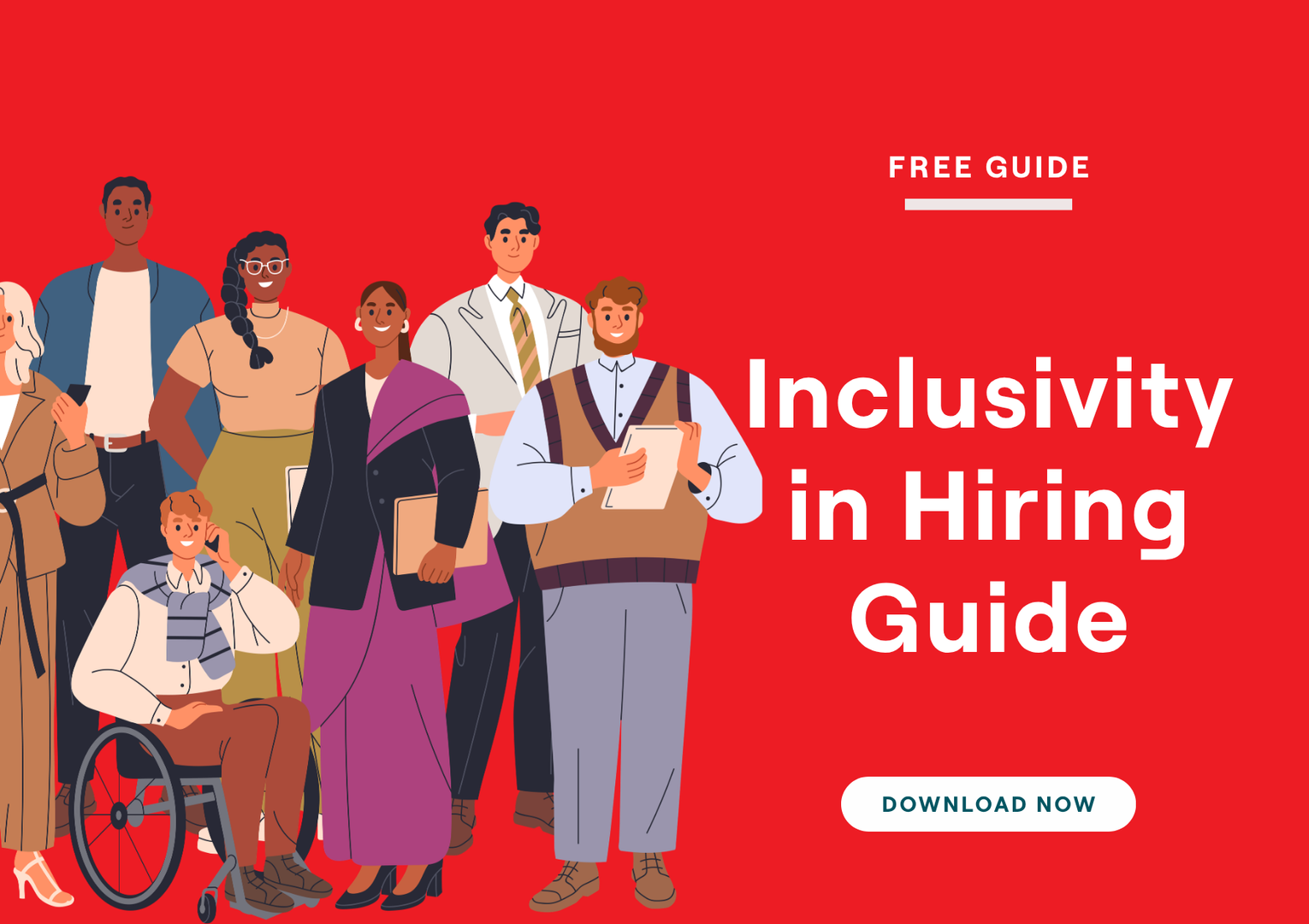
Inclusivity in Hiring Guide
"Inclusive teams are 10 times more likely to be innovative, 8 times more likely to work effectively together, 4 times more likely to provide excellent customer service, and 2.5 times more likely to work extra hard for team success."
- The Diversity Council of Australia's Inclusion@Work Index 2025–2026
This guide outlines where bias most commonly enters the hiring process and what practical steps reduce its impact.
Small inconsistencies in hiring processes have a bigger impact than most teams realise.
Even with clear policies and good intent, small decisions across the hiring process can introduce bias. These inconsistencies affect who applies, who progresses and who ultimately gets hired.
Bias rarely comes from one decision. It builds across stages — from how roles are defined, to how candidates are assessed, to how final decisions are made. Without clear structure, evaluation becomes inconsistent and harder to control.
Where hiring processes break down
This guide outlines practical, evidence-based ways to improve consistency at each stage of hiring — helping teams make clearer decisions, access broader talent pools and reduce unintended bias.
What you can do differently
1. Role definition and attraction
How job requirements, language and criteria influence who applies — and how to broaden your talent pool without lowering standards.
What You'll Learn
2. Shortlisting and interview structure
How to move from impression-based decisions to structured, evidence-led evaluation — reducing reliance on “gut feel” and familiarity.
3. Decision-making and offer consistency
Why bias often re-enters at the final stage — and how to maintain consistency in decisions, stakeholder input and salary outcomes.
4. Measurement and accountability
How tracking progression across the hiring funnel reveals where candidates drop off — and where to focus improvement.